Shadow Warriors
A PHOTO Story of the Office of Strategic Services in 1945 France
The images catch the eye, not for their particular style or aesthetics: black and white photographs of a group of cheerful people wearing American uniforms or dressed in civilian clothes, laughing together. Sentences typed at the back of each photograph with a typewriter, not written in pencil as would usually be the case. Some names sound “real”, others sound more like “noms de guerre”. There’s a joyful feel to these photographs, a sense of friendship or bond, a festive atmosphere.
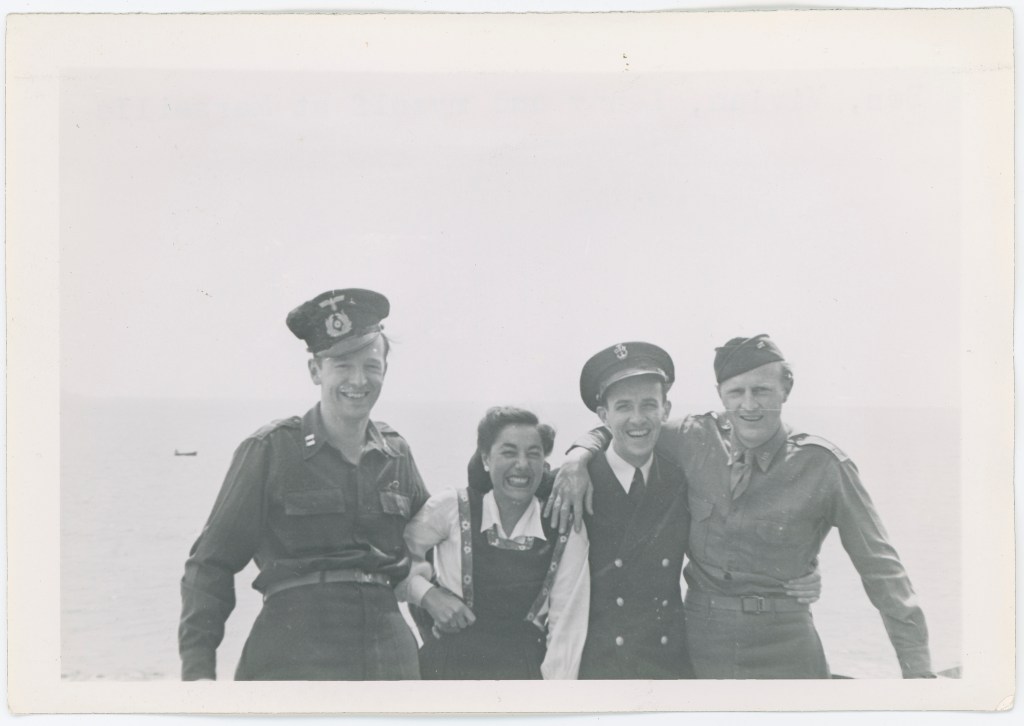
The period, however, is far less joyful. As it turns out, the year is 1945, and the location, France. The Allies have already landed in Normandy and in the South of France and Paris has been liberated, paving the way for the capitulation of Nazi Germany. As the enemy retreats, the many impacts of the war have become more apparent throughout the country: the economy is in ruins; infrastructures have been destroyed; roads, bridges and harbors have been wrecked from Dunkerque to Brest, Bordeaux to Toulon. Transports disruptions have led to a general supply shortage. The country is gutted.
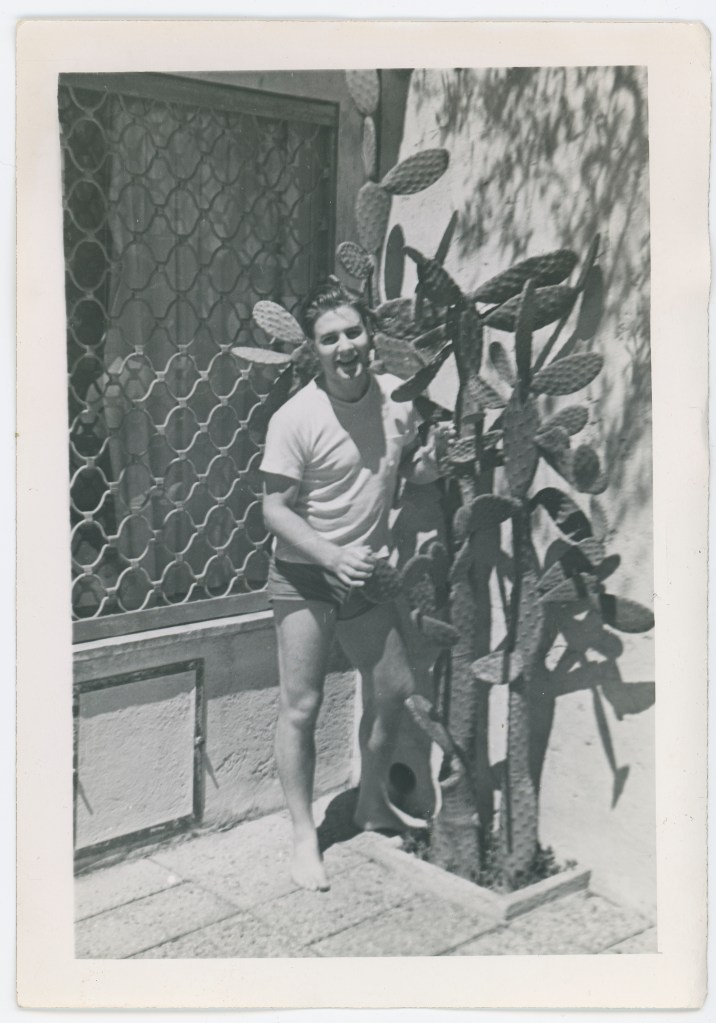
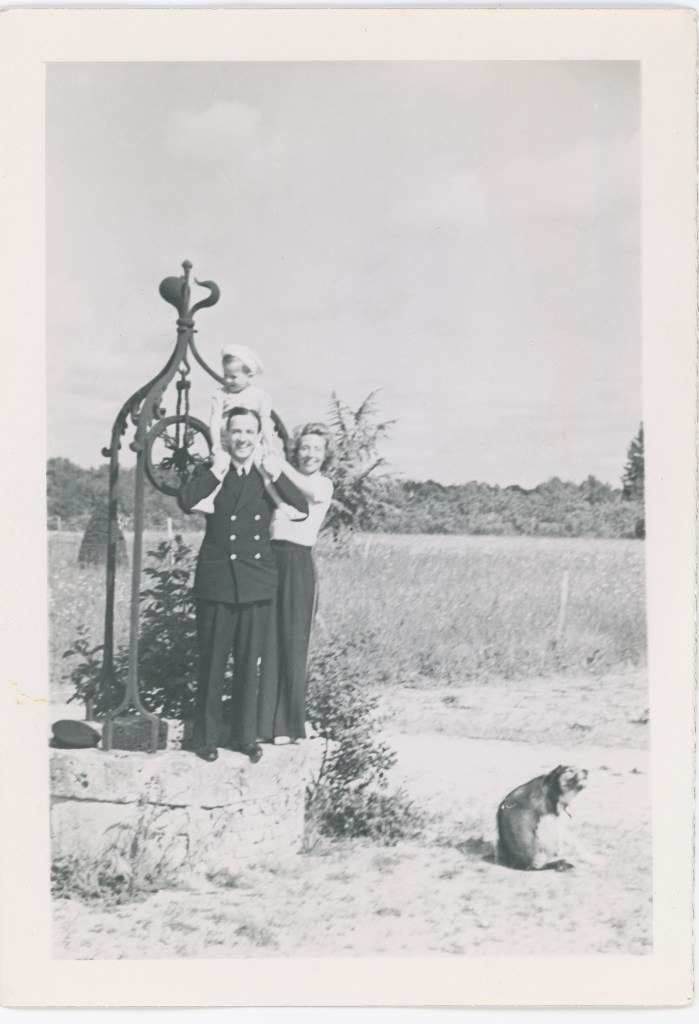
So who are these American soldiers and what are they doing here? John Potter, William Gordon Merrick, Captain Philip Chadbourn, Ben Welles, Cpl. Sidney “Lenny” Lenington, Henry Finger, Dorothy Tremblay, Arnold Fawcus are all agents of the Counter Espionage Branch of the Office of Strategic Services (OSS). They come from all walks of life. Some of them have had a career in the military, others are socialites. All of them are linguists, trained in enemy agent identification, capture, and interrogation.
1945 is an important date for them too in fact, as the OSS, created in 1942 under President Roosevelt as the first intelligence and unconventional warfare agency of the country, is about to be dismantled. Led by William J. Donovan, the OSS was designed to collect and analyze strategic information and conduct special operations. It had already proven particularly useful since entering World War II in 1942, to understand the German war effort, support the Allied landings in France, and provide the French Resistance with logistical and financial support.
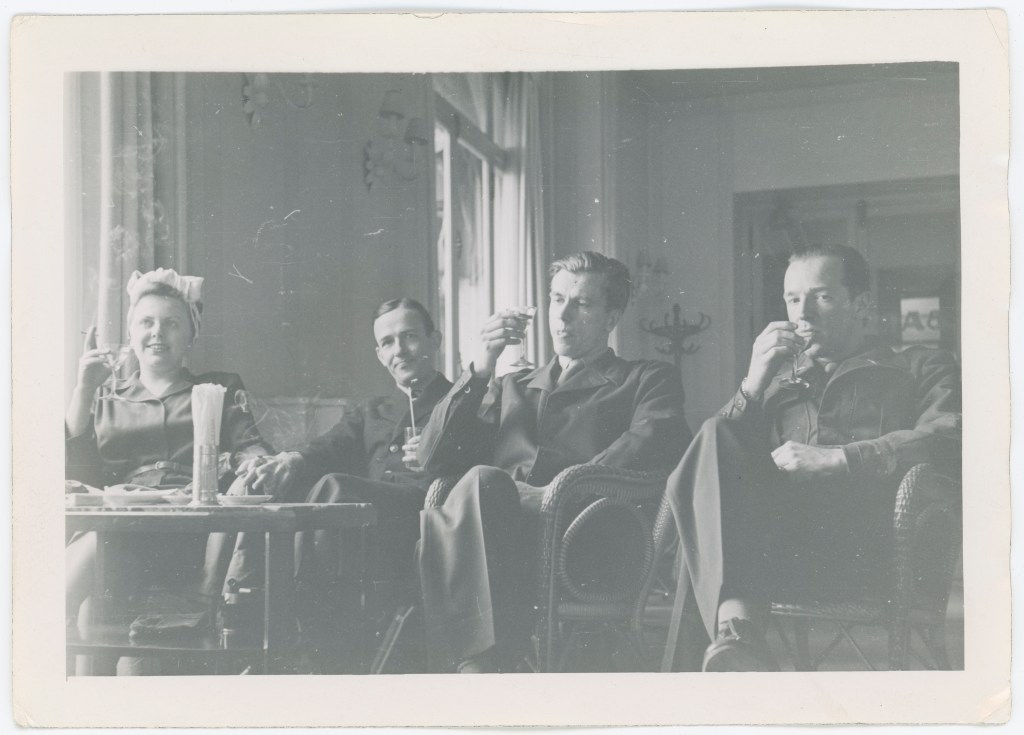
The X-2 unit, to which they belong, works with the British Government, among others in the exploitation of Ultra, the intelligence resulting from the use of the German cipher machine Enigma.
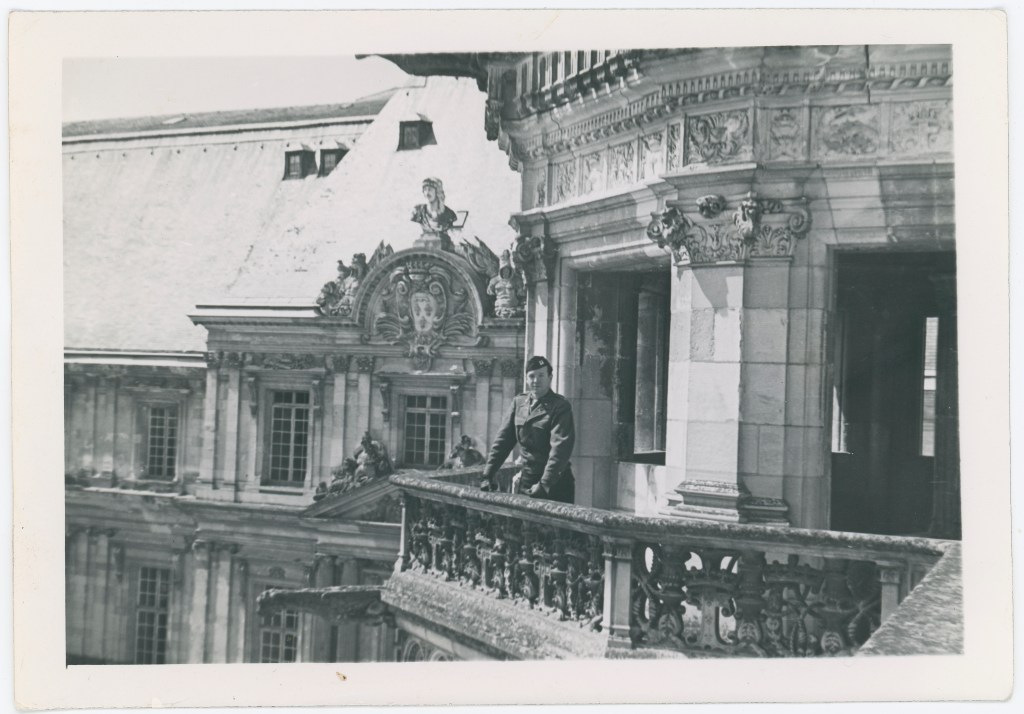
In the French Riviera, they are based in Marseilles and Cannes. Split in small teams and armed with cars and radios, OSS agents track down their targets every day. The radio station they have set up at the Villa Isabella in Cannes helps them coordinate their efforts with the Seventh Army and OSS Headquarters in Paris.
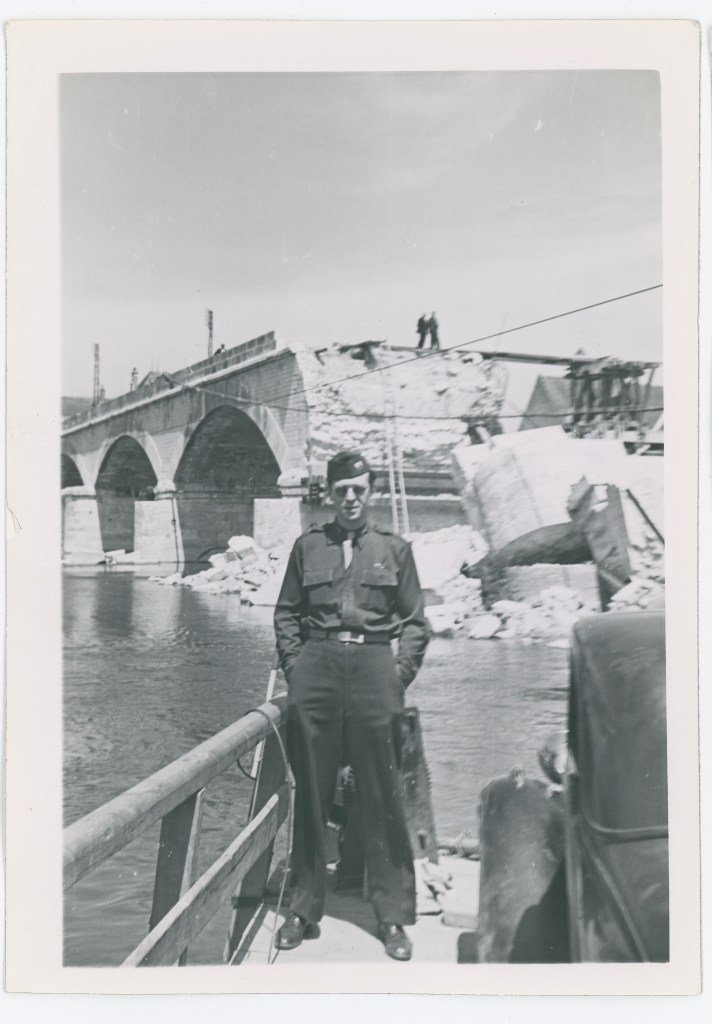
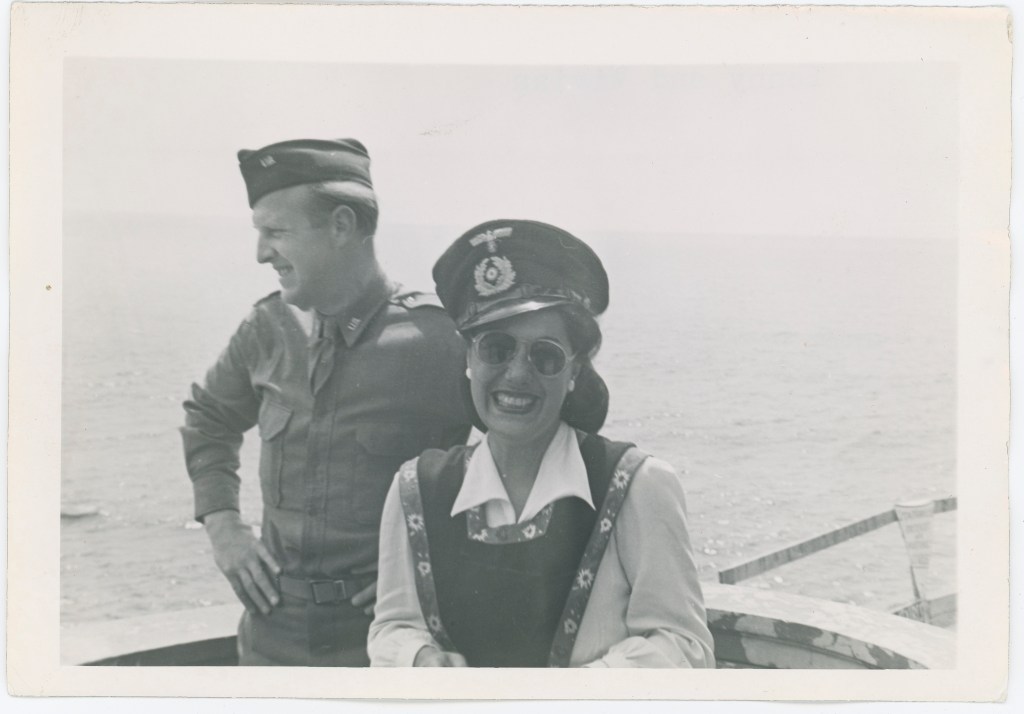
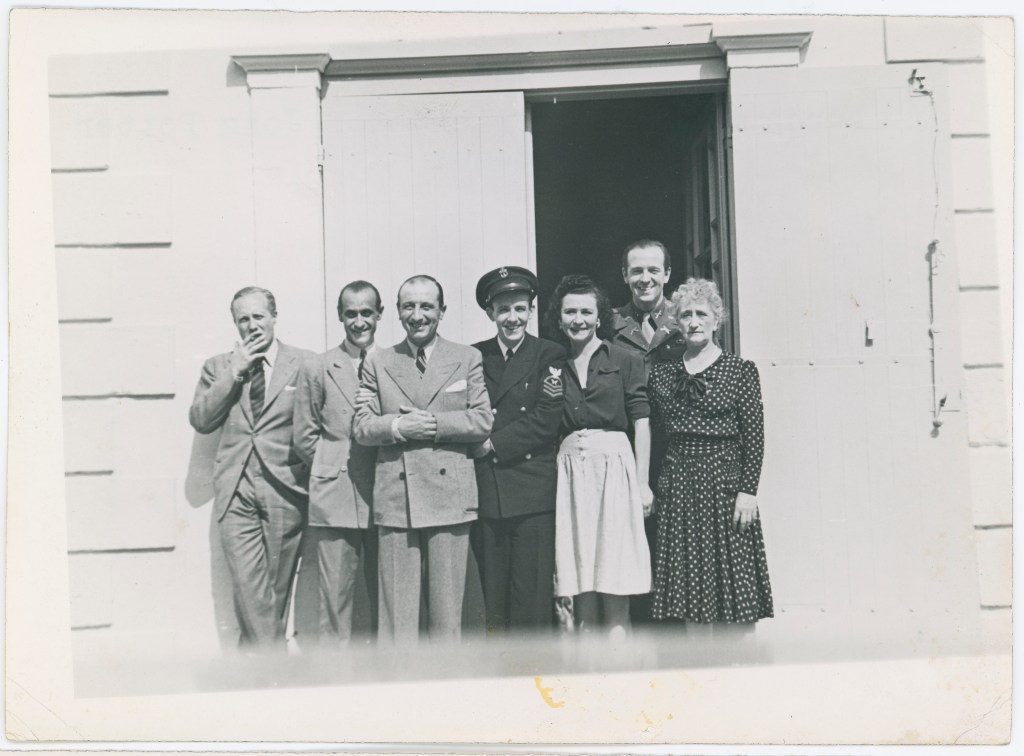
While these photographs (taken by one of these agents), are candid, ordinary personal shots taken mostly off-duty, the everyday life of these X-2 agents is far more secretive and extraordinary. During the last months of WWII, their main task is to chase “stay-behind” German spies: agents and collaborators who remained behind while the Wehrmacht retreated up North.
The distribution of labor between American agents and French authorities is clear, it’s a “finders-keepers” arrangement: whoever arrests enemy agents can interrogate them and dispose of them… OSS agents’ priority is not to arrest or kill German agents, but to turn as many as possible and recruit them to resume contact with the German authorities and deliver false information to them. Alternatives are few for those caught at the time: foreign agents would usually quickly agree to work for X-2 to avoid being handed over to the Resistance.
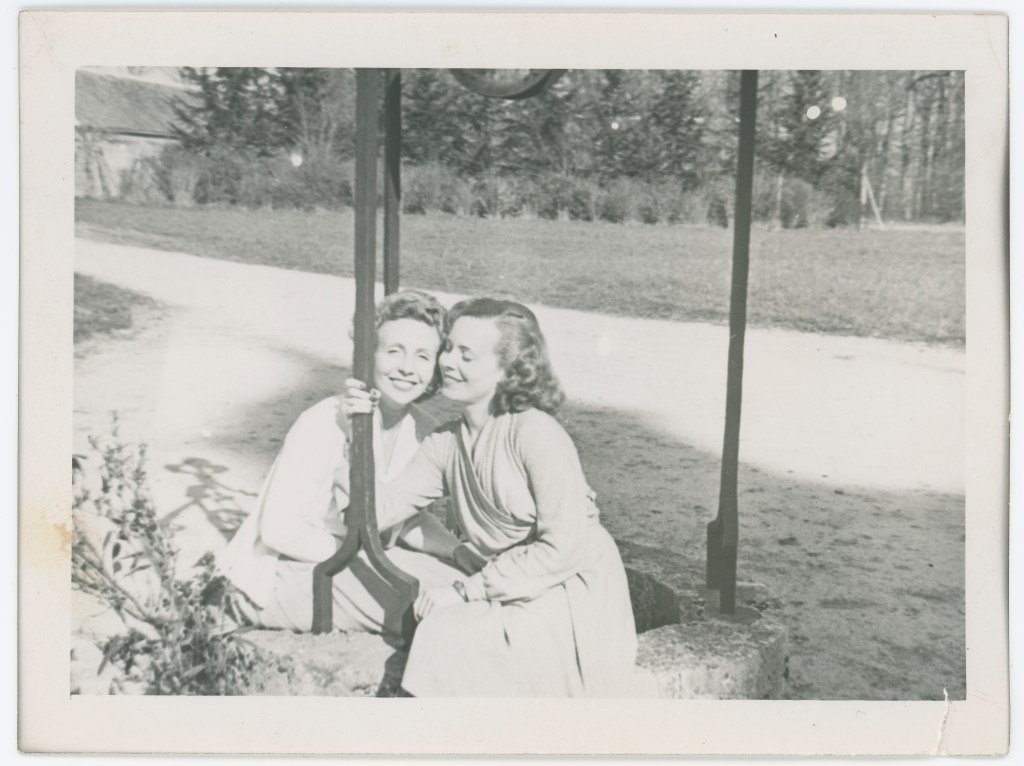
Finally, there are many women on these photographs, I notice. And much has already been written about women of the OSS, who make one third of all recruits. They play an important part in espionage and sabotage in France, where the Resistance has long used women as well as men.
In the United States, women are mostly recruited for secretarial work. But World War II offers them more possibilities in Europe. At a time when most women did not pursue careers and married young, the sudden need for human decoders provides a new opportunity for them to embrace exciting careers with the US Army.
June Nygaard and Vivian Suchards (photographed in this series) both start working at the OSS as cryptographs or translators. They are trained to decipher coded messages, they collected information, looked for patterns. On the European front, the glamour of their career also met a hard reality. Some of their peers will end up in Ravensbrück, the women’s concentration camp, some are killed. After the war, their contribution is often overlooked or forgotten. The most famous American women agent in France was probably Virginia Hall although many others played a critical role, like Betty Lussier and her sister Nissa, who worked in X-2 units in the South of France too.
There are still holes in this story… Some of the photographs have not given up all their secrets. Some are taken in the Loire Valley, where many castles were used to protect artworks during WWII or as military hospitals or safe haven for refugees, Resistants or prisoners. But I still don’t know why the Bon Hôtel castle in Sologne is featured on some of them. I do not understand the agents’ connection to Gilberte Burrus, who lived in the Bon Hôtel castle, and who can be seen multiple times. I also didn’t manage to recognize the people on the pictures in Bordeaux, who I presume to be French.
The OSS was disbanded in October 1945 to be replaced by the CIA, paving the way for modern times US intelligence. While June or Vivian returned to Washington, DC to work for the State Department or the CIA, others went back to civilian life, like Arnold or Gordon who wrote and published books for decades after the war.
All of the people in the photographs of this series are now dead, and despite fascinating visits to the National Archives and Records Administration, they will have left behind very little information for us to piece their story together… (…they were spies after all!)
About the People in these Photographs…
What I know…
- Philip Chadbourn, a paratrooper, is originally assigned to the Jedburgh HILARY mission, and parachuted in France in July 1944. He is later assigned as Case Officer of the Toulouse and Marseille X-2 Units. He is awarded a Bronze star in April 1945 for his service as organizer and director of Resistance forces in enemy occupied territory.
- Vivian Blanche Suchard is an American civilian, based in France before being transferred to London. An intelligence analyst, she is originally a translator in French and Spanish. Upon her return to Washington, DC in June 1945, she transfers to the State Department and lives at 2006 Columbia Road.
- Ben Welles is the son of Assistant Secretary of State Sumner Welles. He is based in Paris.
- William Gordon Merrick, a civilian, the great-grandson of the Philadelphia philanthropist Samuel Vaughn Merrick. Merrick studied French literature at Princeton University before moving to New York City to become an actor. In 1941, he quits Broadway to become a reporter, working for the Washington Star, the Baltimore Sun, the New York Post. Eager to join the war effort, he gets a job with the OSS, which sends him to Algeria as a counter-intelligence officer, rising to the civilian rank of captain. He is then diverted to France and takes up residence in Cannes with the Secret Counter Intelligence Unit. Because he speaks excellent French, the OSS gives him papers listing him as a French citizen. In August 1945, Merrick resigns and returns to the US to continue writing novels.
- June Nygaard, from the office of the chief of X-2 Paris was a cryptographic, employed in signal security control section, communications division. After her assignment in France, she moves back to Washington, DC where she lives at 1835 Irving Street.
- Sidney H. Lenington, “Lenny” was born in Brazil. He is a Special Agent, working in Paris, Lyon and in Germany. He is awarded Theatre Commander Certification of Merit In June 1945. He is based in Marseille for X-2.
- Arnold Douglas Fawcus, a British man naturalized US citizen is recruited in London, to go to Caserta. In Aug 1944, he is assigned to participate in the work of the SCI Unit in France. Despite his small stature, he is an athlete and a great skier so in the early days of WWII, he works as instructor of American troops in Alpine warfare. Having completed this task he decides to join the OSS. He is fluent in French. Working from London, he works on Ultra. After the war, he returns to civilian life to become the owner of the Trianon Press in Paris, a publishing house of fine books.
 Liberty Square
My father’s first cousin, C.W. McDsniel, Liytttle Rock, Arkansas, served with the OSS in France. My aunt had a Croix de Guerre award letter on her wall, which is how I discovered that. He wouldn’t say much about it.
Are there photos of him in that archive?
LikeLike
I do no think so but I will check. Thanks for your interest!
LikeLike
Fascinated!
LikeLike
Thank you!
LikeLike
Have you come across any photos of Charles Gossage Grey.? X2 South of France then Paris .
Thanks
LikeLike
Unfortunately, I do not think so but I will check!
LikeLike